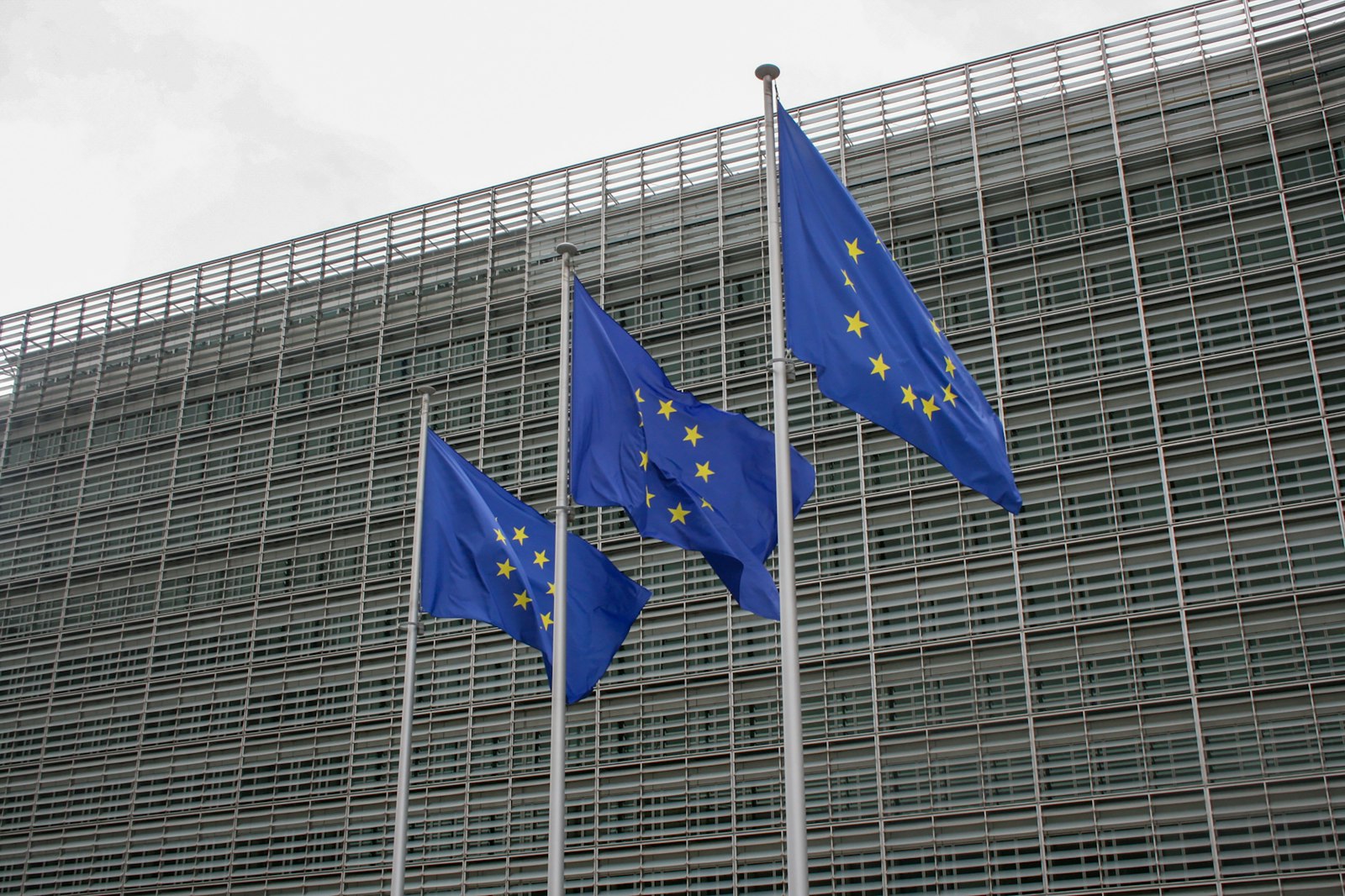
The EU’s Empowering Consumers for the Green Transition (ECGT) Directive — also known as the EmpCo Directive — takes full effect on September 27, 2026, and it changes what businesses can legally say about a product’s environmental credentials in the EU. Formally Directive (EU) 2024/825, it amends the Unfair Commercial Practices Directive and the Consumer Rights Directive to outlaw a specific list of environmental marketing practices outright, rather than leaving them to a case-by-case fairness test. This post summarizes what the directive actually requires, how it’s enforced, and how a Life Cycle Assessment (LCA) gives a company the evidence a compliant claim now needs.
What Is the ECGT Directive?
Directive (EU) 2024/825 was adopted on February 28, 2024, and entered into force that March. It gave EU member states until March 27, 2026 to transpose it into national law, with the rules becoming binding on businesses from September 27, 2026. Unlike a regulation, a directive doesn’t apply uniformly on day one — each member state writes it into its own national consumer protection law, so the exact wording and national-level penalty ceiling can vary slightly by country, even though the underlying bans are the same across the EU.
The directive works by adding a list of specific practices to Annex I of the Unfair Commercial Practices Directive — the EU’s “blacklist” of practices considered unfair in all circumstances. That matters because Annex I practices don’t require a regulator to prove a claim actually misled anyone; if a claim falls into a listed category, it’s unlawful regardless of intent or outcome.
Is this the same as the EU Green Claims Directive? No — and it’s worth being precise here, because the two are easy to mix up. A separate, broader Green Claims Directive proposal — which would have added a mandatory pre-approval process for environmental claims — stalled after the European Commission announced its intention to withdraw it in June 2025. The ECGT Directive is a different, already-adopted law that isn’t affected by that outcome; its bans apply from September 2026 regardless of what happens to the Green Claims Directive proposal.
What the ECGT Directive Requires
The directive bans several categories of environmental claims and unfair practices outright:
- Unsubstantiated generic claims. Terms like “eco-friendly,” “green,” “sustainable,” or “climate friendly” can’t be used unless the trader can demonstrate “recognized excellent environmental performance” — a term the directive defines narrowly: compliance with the EU Ecolabel, a national or regional EN ISO 14024 Type I ecolabel scheme (Germany’s Blue Angel or the Nordic Swan, for example), or a top performance class under other applicable EU law such as the Energy Labelling Regulation. Even then, the qualifying detail has to be specified clearly and prominently on the same packaging, website, or ad as the claim itself — not buried in a footnote.
- Whole-product claims based on one aspect. A trader can’t market an entire product or its whole business as environmentally beneficial when the underlying benefit actually relates to only one part, ingredient, or stage.
- Offset-based “climate neutral” claims. Claims that a product has a “neutral,” “reduced,” or “positive” environmental impact because of greenhouse gas offsetting are banned outright, unless the product’s own actual lifecycle impact is genuinely neutral — offsetting outside its value chain can no longer stand in for a real reduction (see How LCAs Provide the Basis for a Claim below). This strict, automatic ban applies at the product level specifically; a corporate-level claim (“our company is on a path to net zero”) isn’t on the Annex I blacklist in the same way and instead falls under the directive’s general rules on unverifiable future claims, covered below.
- Unverified sustainability labels. From September 2026, a sustainability label is only permitted if it’s either established by a public authority or based on a certification scheme that’s transparent, open to any business that meets its criteria, developed with expert input, and monitored by an independent third party — one accredited to a recognized standard such as ISO 17065 — with a complaints process in place. Self-designed trust marks with no independent oversight don’t qualify.
- Marketing legal minimums as differentiators. A trader can’t present a requirement already imposed by law on every product in that category — a mandated recycled-content percentage, for instance — as if it were a distinctive feature of their own offer.
- Practices tied to premature obsolescence. This includes falsely claiming a product is repairable, hiding a design feature known to limit a product’s lifespan, presenting a software update as necessary when it merely adds features (or the reverse), and inducing consumers to replace consumables earlier than needed.
- Unverifiable future claims. A claim about future environmental performance — “net zero by 2040,” for example — is only allowed when it’s backed by a specific, publicly available implementation plan with measurable, time-bound targets and independent, external monitoring.
What this looks like in practice:
Not compliant: “Climate-friendly packaging.”
Compliant: “This packaging is produced using 100% certified renewable electricity, verified under ISO 14064-1.”
The first is exactly the kind of vague, unsubstantiated claim ECGT bans outright. The second names the specific aspect of the product the claim covers, states a measurable fact, and points to how it was verified — the level of specificity Annex I now requires.
Alongside the claims bans, the directive’s amendments to the Consumer Rights Directive add new pre-contractual information duties: where relevant, consumers must be told about the existence and duration of a producer’s commercial guarantee of durability, the availability of repair services, and — for goods with digital elements — the minimum period during which software updates will be provided.
Enforcement and Penalties for Non-Compliance
Once transposed, ECGT is enforced the same way as the rest of the Unfair Commercial Practices Directive: by each member state’s national consumer protection authority, coordinated across borders through the EU’s Consumer Protection Cooperation (CPC) Network for cases that span multiple countries.
The penalty framework is the one already strengthened by the EU’s 2019 “Omnibus” Directive: for infringements found to be widespread across the EU, member states must be able to impose a maximum fine of at least 4% of the trader’s annual turnover in the member states concerned, or up to €2 million where turnover data isn’t available. Individual member states are free to set their national ceiling higher, so the effective exposure can vary by country.
Beyond regulatory fines, the directive gives individual consumers a route to redress — compensation for damages, a price reduction, or contract termination — where they’ve been harmed by a banned practice. Consumer groups can also bring collective actions under the EU’s Representative Actions Directive. In practice, a non-compliant claim carries three separate kinds of exposure: a direct fine, individual or collective consumer claims, and the reputational cost of a claim being publicly struck down.
Does the ECGT Directive Apply to UK Businesses?
Yes. ECGT’s scope follows the consumer, not the trader — any business marketing to EU consumers is covered regardless of where it’s based, so Brexit doesn’t exempt UK companies selling into the EU. A UK retailer advertising into France or Germany needs to comply with ECGT for that audience just as an EU-based competitor would.
UK businesses aren’t operating in a vacuum on this either: the UK has its own, broadly parallel regime moving in the same direction, combining the CMA’s Green Claims Code with the newer Digital Markets, Competition and Consumers Act 2024, which gives the CMA direct fining powers for unfair commercial practices — including misleading green claims — without going to court first. A UK company that’s already substantiating claims to Green Claims Code standard has a real head start on ECGT compliance for its EU-facing marketing, but the two regimes aren’t identical and each needs its own compliance check.
How Certification Schemes Are Already Adapting
The clearest sign of how seriously ECGT is being taken is that major certification bodies are rebuilding their programs around it well ahead of the deadline. B Lab, which runs the B Corp certification, is a good example: it’s rolling out new B Lab Standards (V2) built to meet ECGT’s definition of a valid sustainability label, and has set its own internal deadline — July 15, 2026 — for EU-affected B Corps to submit for re-verification against the new standard. Companies that miss it risk losing the right to use the B Corp logo or describe themselves as a Certified B Corporation once ECGT applies. If a certification your business already holds hasn’t said how it’s adapting to ECGT, that’s worth asking about now rather than in August 2026.
How LCAs Provide the Basis for a Claim
Read closely, ECGT doesn’t just ban bad marketing copy — it bans making a claim without the underlying data to support it at the level of rigor the directive now expects. That’s where a properly scoped Life Cycle Assessment, built to ISO 14040/14044, becomes the practical foundation for compliance rather than an optional extra:
- It’s the only way to verify a whole-product claim. ECGT bans claiming a benefit for an entire product when it only applies to one aspect. An LCA is built precisely to capture impacts across every life cycle stage — raw materials, manufacturing, distribution, use, and end of life — so it’s the tool that can actually confirm (or disprove) whether a “whole product” claim holds up.
- It replaces offsets with a real number. Since offset-based neutrality claims are now banned, a genuine reduced-impact claim has to be quantified from primary and lifecycle data. A Product Carbon Footprint (PCF) calculated under a recognized standard like ISO 14067 or the GHG Protocol Product Standard is what lets a company state an actual emissions figure, rather than one implied by purchased credits.
- It’s the basis a compliant label needs. ECGT requires sustainability labels to sit on a certified, independently verified scheme. An Environmental Product Declaration (EPD), built on an underlying LCA and verified under ISO 14025 by an accredited third party, is exactly the kind of transparent, independently monitored evidence the directive is asking for — unlike a self-designed green icon with no verification behind it.
- It supports a defensible future claim. A forward-looking target needs measurable, time-bound milestones and independent monitoring to be lawful under ECGT. An LCA-based emissions baseline, re-assessed on a regular cycle, is what gives a science-based target or reduction roadmap something concrete to be measured against.
What to Do Before September 2026: A 3-Step Checklist
- Audit every environmental claim you currently make — across packaging, your website, ads, and sales materials — and flag anything that’s generic (“eco-friendly,” “green”), whole-product (“sustainable” when only the packaging changed), or offset-based (“carbon neutral” via credits). This is the fastest way to find your actual exposure before a regulator or competitor does.
- Get defensible data behind every claim you want to keep. That means a full-scope Life Cycle Assessment or Product Carbon Footprint covering the relevant GHG Protocol scopes — not a marketing-team estimate — for anything you can’t retire or reword by September 2026.
- Check every label and certification you display against ECGT’s bar, not just your own: is it backed by a scheme that’s transparent, open to any qualifying business, and independently monitored by a body accredited to a standard like ISO 17065? If a certifier you use hasn’t confirmed its own ECGT compliance, ask before you assume your label is still valid.
Key Takeaways
- ECGT (Directive (EU) 2024/825) applies to B2C environmental claims across the EU from September 27, 2026 — it’s separate from, and unaffected by, the stalled EU Green Claims Directive proposal.
- It bans several practices outright: unsubstantiated generic claims, whole-product claims based on one aspect, offset-based “climate neutral” claims, unverified sustainability labels, marketing legal minimums as differentiators, and practices tied to premature obsolescence.
- “Recognized excellent environmental performance” has a narrow, specific meaning under the directive — the EU Ecolabel, a national EN ISO 14024 Type I scheme like Blue Angel or the Nordic Swan, or a top Energy Labelling Regulation class — not a general sense of being environmentally responsible.
- Enforcement runs through national consumer authorities, with fines of at least 4% of annual turnover (or up to €2 million) for infringements found to be widespread across the EU — plus individual consumer redress and collective-action exposure.
- It applies based on where the consumer is, not where the trader is based, so non-EU companies — including UK businesses selling into the EU — are in scope, and major certifiers like B Lab are already rebuilding their programs to comply.
- A claim now needs evidence behind it before it’s made, not after. A Life Cycle Assessment, Product Carbon Footprint, or EPD is what turns a marketing statement into something that can survive a regulator’s or a competitor’s challenge.
How CarbonBright Helps With ECGT Compliance
CarbonBright’s AI-native platform generates audit-ready Life Cycle Assessments, Product Carbon Footprints, and Environmental Product Declarations from your product data automatically — giving every environmental claim a lifecycle-based, verifiable foundation before it ever reaches a label or a marketing page. Contact us to talk through how to get your claims ready before September 2026.